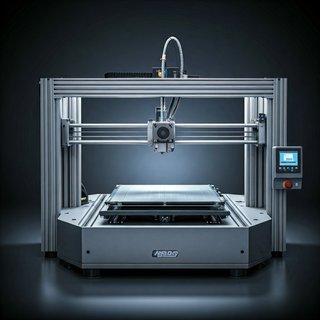
3D Printing: From Concept to Creation
3D printing, also known as additive manufacturing, has revolutionized the way we create objects. By building objects layer by layer, 3D printers can produce complex shapes and geometries that would be difficult or impossible to create using traditional manufacturing methods. This technology has found applications in a wide range of industries, from aerospace and automotive to healthcare and consumer goods.

How 3D Printers Work
At the core of a 3D printer is a nozzle that deposits material, layer by layer, to create a three-dimensional object. The material used can vary depending on the type of 3D printer, but common options include plastics, metals, and ceramics.
The printing process begins with a digital model of the object to be printed, which is typically created using computer-aided design (CAD) software. This model is then sliced into thin layers, which are sent to the 3D printer.
The printer reads the layer data and extrudes the material through the nozzle in a controlled pattern. As each layer is deposited, it bonds with the previous layer to create a solid object. This process is repeated until the entire object is built.
Types of 3D Printers
Several types of 3D printers are available, each with its own advantages and disadvantages. Some of the most common types include:
- Fused Filament Fabrication (FFF): This is one of the most popular types of 3D printers. It uses a plastic filament, such as ABS or PLA, which is melted and extruded through the nozzle. FFF printers are relatively affordable and easy to use, making them popular for home and hobby use.
- Stereolithography (SLA): This type of printer uses a laser to solidify a vat of liquid resin. SLA printers are capable of producing high-resolution, detailed objects with smooth surfaces.
- Selective Laser Sintering (SLS): This process uses a laser to sinter (fuse) powdered material, such as nylon or metal, into a solid object. SLS printers are often used for industrial applications, as they can produce strong, durable parts.
- Digital Light Processing (DLP): This technology uses a projector to project a light pattern onto a vat of liquid resin, which cures the resin in the desired shape. DLP printers are known for their high speed and accuracy.
Building a Gun with a 3D Printer (Disclaimer)
3D printers can be used to create a variety of objects, including firearms. **However, there are legal restrictions in many countries on the use of 3D printers to produce firearms.** It is important to consult with the relevant authorities in your jurisdiction before attempting to build a firearm with a 3D printer.
The information provided here is for educational purposes only and should not be taken as legal advice.
Conclusion
3D printing is a versatile and powerful technology with a wide range of applications. It is a rapidly evolving field, and new developments are constantly being made. As 3D printing becomes more accessible and affordable, we can expect to see it used in even more innovative ways in the years to come.


Nice simple explanation of what 3D printing is. Great for beginners. Professional firms like HLH Prototypes Co. Ltd. take it further with high-end materials and precision.
ReplyDelete